
Over the years, we were grateful to have met leaders who are building solutions that genuinely make life better. From medical technologies and new drug discoveries to smarter care and sustainability breakthroughs, these leaders carry enormous responsibility on behalf of society.
We also see the other side.
How the mission becomes heavier year after year.
How passion can turn into pressure.
How wellbeing is often the very last thing protected.
Many leaders tell us they feel they must remain strong no matter what. They continue forward even when exhausted, because stepping back feels like letting others down.
This is why we reached out to trauma specialist Anna Pinkerton. We wanted to better understand how leaders can stay well while achieving meaningful impact, without one coming at the expense of the other.
Meeting Anna
A few days ago, we got on a call with Anna Pinkerton, a trauma specialist who supports CEOs, founders and executives through some of the most demanding periods of their lives. She works with people who carry responsibility on their shoulders every single day. Financial decisions. Team wellbeing. Future-defining choices. Often under scrutiny and often alone.
Anna welcomed us with warmest smile and voice
Anna has a warm and grounded presence. When she speaks, there is no judgement. Only understanding. Her work today is driven by a belief that leaders can stay ambitious, achieve incredible things, and remain well while doing so. It does not need to be a choice between success and survival.
When Stress Becomes Something Else
Anna explained that trauma is not always dramatic. It does not always announce itself with sirens. Most leaders understand stress. They even rely on it. But stress that continues without pause or relief becomes adversity. And long-term adversity, when the nervous system has no chance to recover, slowly becomes trauma.

Rather than one defining moment, it can be accumulated over time. The tenth urgent message. The restructuring that keeps you awake for weeks. The pressure to look unshakeable in front of investors. The sense that your decisions affect every household on your payroll. One day, the smallest request can trigger a feeling of total overwhelm. Not because the request is large, but because the system has been enduring too much for too long. It simply cannot take another thing.
Living Post-Trauma
Anna explained that once a person has experienced trauma, she believes that the brain does not simply return to its original baseline. We continue through life as post-trauma humans. The nervous system stays alert, always scanning for what might go wrong next, even when life appears calm.
What looks like resilience from the outside can often be a nervous system working incredibly hard just to stay upright. Leaders who have survived difficult experiences may appear composed, decisive and highly capable, yet internally they can be operating with far less bandwidth than before. After periods of severe overload, such as burnout, the nervous system can become sensitised, meaning it takes much less trigger overwhelm next time or exhaustion because the system is already operating close to its limits. With appropriate recovery, regulation and support, capacity can be rebuilt, but without this, vulnerability to further traumatisation may persist.

Nothing dramatic has to happen. One more decision, one more tight deadline, one more unexpected complication may be enough for the system to say: “This is too much.” The reaction seems sudden to others, but the brain has been holding tension for a very long time.
The Disappearing Highs
Leaders often describe the early years as a rollercoaster. Big wins bring euphoria. Setbacks feel devastating. Over time, though, something shifts. The peaks and valleys flatten. Success does not bring the exhilaration it once did. Challenges no longer shock or exhilarate.
Anna sees this often. A nervous system that has been stretched too far for too long may dull both extremes to protect itself. It can feel steady from the outside, but inside, something has been muted. Leaders begin to notice the absence of joy. Not unhappiness. Just a quiet emptiness where excitement once lived.
The Fuel Behind the Drive
Anna spoke about how passion is often the heartbeat of leadership. Leaders build companies because they care. They want to solve a problem. Change a system. Help others. That intention is powerful and beautiful.
Yet sometimes passion becomes tangled with fear. Fear of slowing down. Fear of failing others. Fear of confronting how much the journey has already taken. Some leaders are propelled by the need to prove they are unaffected by past wounds. The drive becomes powered by pain instead of meaning.
“Fear cannot be your fuel,” Anna said gently. A mission can lift you. It should not consume you consistently. High pressure, high-stress must be occasional otherwise we train the brain for hyper-alert, and that creates a brain in fight or flight response.
Leading Without Self-Sacrifice
As our conversation drew to a close, Anna returned to the principle behind all her work: high-performing leaders are still human. Stress and trauma do not vanish because someone becomes a leader. They simply become less visible.
Her first call to action is awareness. Leaders need to understand what happens in the brain under prolonged pressure, not at the crisis point, but much earlier. Insight prevents exhaustion becoming injury.
She urges leaders to rethink how they treat themselves. Many continue to drive success with relentless self-criticism, convinced that harshness equals strength. But a brutal inner dialogue keeps the brain in threat mode. Kindness toward oneself is not soft, it is stabilising.
Emotional numbness is another warning sign. When highs and lows flatten into indifference, the nervous system may be protecting itself rather than thriving. Leaders need their full emotional range to adapt, connect and recover.
And recovery is not a one-off event. It is a continual recalibration, pausing, adjusting, noticing when the body is whispering rather than waiting for it to scream.
“You’re allowed to enjoy this,” Anna said. “Leadership shouldn’t require sacrificing your wellbeing. You can succeed without harming yourself.”
Her message lands with clarity: the brain that drives success needs care too. Protecting it does not slow leadership down, it sustains it.
Closing Reflection
Our conversation with Anna left us with a powerful reminder. The drive to help others is one of the most meaningful parts of being human. Whether we lead companies, contribute to scientific breakthroughs, support patients, raise families, teach, care or build community, our aim is to create positive change.
Anna reminded us that wellbeing is not a break from leadership.
It is how leadership continues.
It is how impact grows.
It is how missions reach the lives they are meant to change.
Caring for our own brain health does not take us away from the mission. It keeps us capable of showing up for it. Fully, compassionately and with clarity. When we give ourselves the same care we extend to others, we preserve our ability to make a difference that lasts.
At LYEONS, we believe this applies to all of us. When we look after our own, the future we’re building becomes stronger. And when people stay well, the world they are working to improve moves forward with them. 🙂
Thank you, Anna Pinkerton, for reminding us that sustaining impact starts with sustaining ourselves.
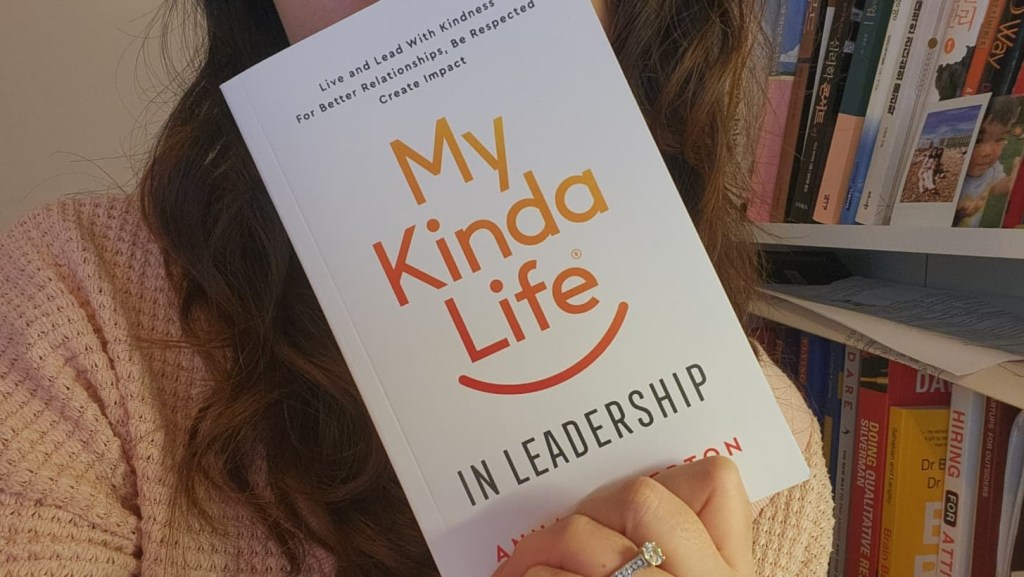
If you would like to learn more from her, You can follow Anna and we found her book both humbling and inspiring. If you quietly struggle with self-doubt, perfectionism, imposter syndrome, low self-esteem or simply feel you would benefit from a moment of reflection, we recommend My Kinda Life by Anna Pinkerton. 😊
Leave a Reply